This The Will of the Many recap refreshes the story before you begin The Strength of the Few. Start with the quick summary, then revisit the events, relationships, and unanswered questions that matter at the end of James Islington’s first Hierarchy novel.
Читати українською: короткий зміст «Волі багатьох»
The Will of the Many: quick summary
Vis, secretly Diago of Suus, enters the Catenan Academy under Ulciscor Telimus’s sponsorship to investigate Caeror’s supposed death. The Anguis also pressure him to advance, while his friendships give him personal stakes in a school he entered under false pretences.
During the Iudicium, he runs the ancient labyrinth and returns to a competition infiltrated by killers. Emissa attacks him after seeing his wound. Callidus dies. Vis wins the contest but loses an arm, then chooses Governance rather than the position Veridius wants for him.
The epilogue reveals separate continuations of Vis in Res, Luceum, and Obiteum. Caeror’s appearance in Obiteum reframes the investigation that began the book. That is the position from which to approach The Strength of the Few.
Vis’s identity and the bargain with Ulciscor
Vis is Diago, a prince of Suus. His assumed identity lets him survive after the Hierarchy destroys his family’s world. At the beginning, he lives as an orphan in Letens, works at a prison, and earns money through fighting. His apparent social position conceals an education and history that would be dangerous to reveal.
Ulciscor encounters him at the prison under the name Hospius. He subsequently adopts Vis and prepares him for the Academy. The opportunity offers status and a possible escape from ceding, but it is conditional: Vis must investigate Caeror’s supposed death and the secrets of the institution where it happened.
Lanistia trains Vis before he enters. Her connection to Caeror and the loss of her eyes make the investigation personal. Ulciscor suspects Veridius, the Academy’s head, but suspicion is the starting point of the mission, not a complete explanation.
The Hierarchy and Will system: essential reminders
The Republic concentrates power by having people cede half their Will to someone directly above them. Will involves the capacities of a person, not simply money or an abstract vote. This makes the social hierarchy a material system of dependence: people below sustain the strength of those above.
Military, Governance, and Religion are the three great political powers. Their competing interests matter whenever someone offers Vis protection, asks for information, or wants him to accept a particular position.
Keep Academy classes, Will ranks, and the title Domitor separate. A student’s class determines their place at school. A Will rank belongs to the wider hierarchy. Domitor is the distinction earned through winning the Academy’s final contest.
You do not need to reconstruct the entire power pyramid before Book 2. Remember who benefits from the system, why Vis resists ceding, and why a placement after graduation can have political consequences. For the mechanics, use the Will system and Hierarchy ranks guide.
The Anguis and the naumachia: what happens before the Academy
The Anguis are rebels against the Hierarchy, but their methods prevent Vis from treating them as natural allies. During the attack on his Transvect journey, Sedotia reveals knowledge of his identity and pressures him to cooperate.
Another crucial name is Estevan, also known as Melior. He was connected to Vis’s family in Suus and now leads the Anguis. Familiarity with Vis’s past does not make him a trustworthy protector.
At the Festival of Jovan, the naumachia—a staged naval battle—becomes the scene of a devastating attack. Vis helps Aequa escape and confronts Estevan. Estevan’s death leaves Vis publicly credited with stopping him, strengthening Vis’s reputation before he enters the Academy.
Vis at the Academy: alliances, discoveries, and the return to Suus
Callidus, Eidhin, and the ruins
Vis starts in Class Seven and befriends Callidus. His relationship with Eidhin improves as language becomes a bridge between them: Vis can communicate with him in Cymrian and helps him learn the Catenan language. Emissa also becomes increasingly close to Vis.
The investigation takes him beyond school rivalries. In the ruins, he encounters eyeless bodies and warnings associated with the ancient mystery. At another site, the deadly labyrinth resembles the one students practise at the Academy. Training and investigation are connected, although Vis does not yet understand the purpose.
During the Festival of Ancestors, Vis discovers that Relucia, Ulciscor’s wife, is Sedotia. She wants him to reach Class Three, win the Iudicium, and become Domitor. Vis has his own plan: use that success to obtain a posting in Jatiere, where Will use is forbidden, and eventually escape. On his return from exploring the ruins, he also helps an injured alupi pup and names it Diago.
Why the visit to Suus matters
Indol’s invitation brings Vis back to his former palace. He rescues Emissa from a dangerous swim, and they kiss. Fadrique, a former royal adviser now serving under Catenan rule, explains that his apparent collaboration is intended to protect the remaining people of Suus.
Spying on a private meeting, Vis learns that certain Military senators are secretly supporting the Anguis to increase fear and strengthen their own position. This implicates particular conspirators; it does not establish that every member of Military knows the plan.
Ulciscor also raises the stakes: he demands that Vis actually pass through the ancient labyrinth, threatening him with a Sapper if he refuses.
How Vis reaches Class Three
Belli holds stolen documents over Callidus. Vis challenges her at Foundation, secures their return, and wins the game to take her Class Three place. The victory advances his mission and frees his friend from that particular threat.
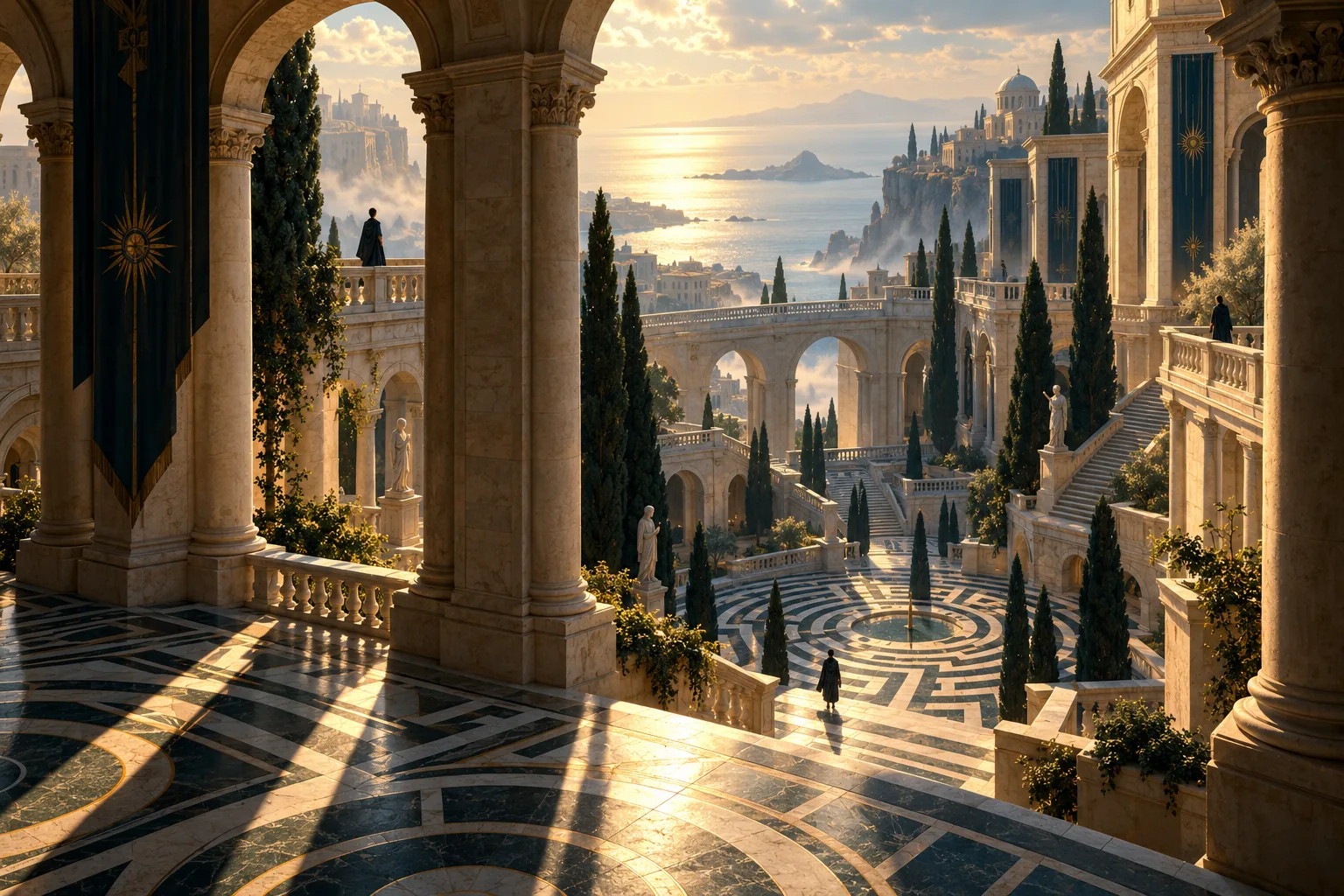
The Iudicium and the labyrinth mission
Vis enters the Iudicium with Callidus and Aequa. Eidhin is an earlier choice but withdraws; do not remember him as a member of the final team. The competition involves recovering the Heart of Jovan and bringing it back to the Academy.
The confusing part is that three different events occur during the same period:
- The official contest: teams pursue the Heart, use tracking information, and negotiate unstable loyalties.
- Vis’s covert mission: he uses an opportunity to enter the ruins and run the ancient labyrinth.
- The attack: Anguis infiltrators replace the safety teams, turning the competition into a genuine emergency.
Early in the contest, Iro’s group captures Vis and Callidus. Aequa appears to switch sides, but returns to help them. Vis’s later separation from Callidus gives him an opening to pursue the ruins. His labyrinth journey is therefore not the publicly announced objective of the Iudicium.
After the labyrinth, Vis returns with a bite wound. When the students discover bodies and recognize the infiltration, warning others becomes more urgent than winning. The formal contest still exists, but it no longer explains the dangers around them.
For the rules and equipment, see the Iudicium explained. For this recap, the main point is the collision of a competition, an investigation, and an attack.
How The Will of the Many ends
Emissa’s attack, Callidus’s death, and Vis’s choice
After seeing Vis’s wound, Emissa stabs him, and he falls into the river. He survives. Later, he tries to bring the gravely injured Callidus back to the Academy, but Callidus dies. Vis returns the Heart and becomes Domitor; victory arrives with devastating personal loss.
When Vis wakes, his injured arm has been amputated. Veridius offers an explanation for Emissa’s actions: she believed Vis was tainted and beyond saving. That is Veridius’s account of her belief, not proof that her judgment was correct or that every motive is settled. The separate Emissa explanation examines that distinction.
One encounter during the attack deserves remembering: an Anguis man recognizes that Vis has passed through the gate and demonstrates an ability Vis cannot explain. The gap between ordinary Will use and what the ruins make possible is still unresolved.
Veridius wants Vis to take a position in Religion. Vis instead chooses Governance, under the Censor, Callidus’s father. Instead of following his original escape plan, he chooses to remain involved. A toy ship by his bed, carved with the name Diago and recognizable from his childhood, adds another reminder that his past is not safely hidden.
The epilogue: Res, Luceum, and Obiteum
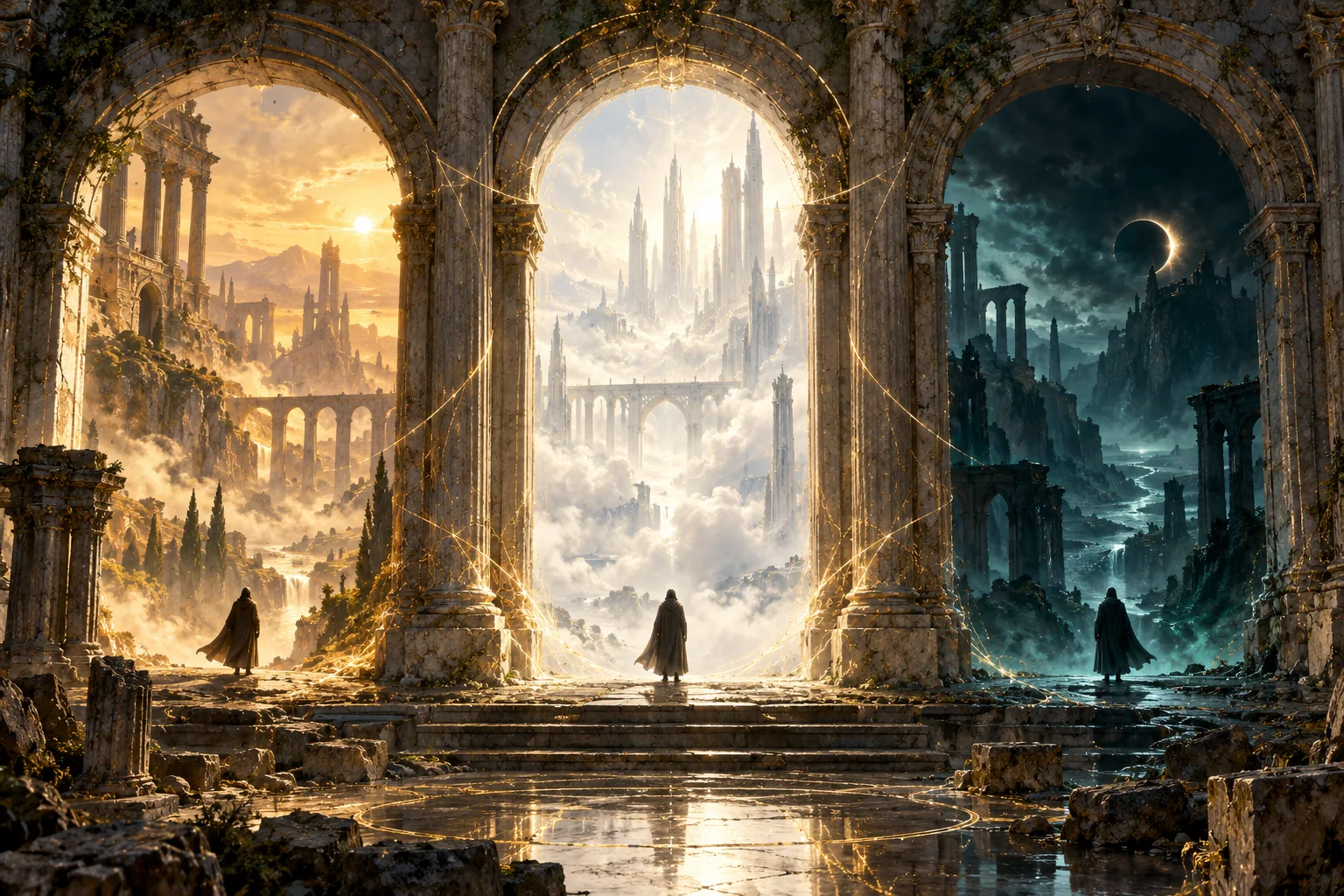
The epilogue revisits the awakening after the gate through different continuations. The crucial revelation is multiple versions of Vis, rather than one traveler making three consecutive visits.
- Res: the familiar Academy narrative, including the mysterious arm messages, the return from the labyrinth, and the later amputation.
- Luceum: another awakening and escape sequence, with a passage that exacts a toll and leaves Vis without his left arm.
- Obiteum: Caeror greets Vis and describes copying. He says Vis in Res needs help.
Caeror’s appearance overturns the simplicity of the investigation that sent Vis to the Academy. The arm clues connect experiences across worlds, but Book 1 does not supply a complete rulebook for shared injuries, memories, or awareness.
Use the full ending explanation for the aftermath and the Synchronism guide for a closer comparison of the closing scenes.
Characters to remember before The Strength of the Few
Use this compact name lookup when a name or alias slips your mind. On a phone, each entry appears as a separate card.
| Character | Why the name matters |
|---|---|
| Vis / Diago | Vis is the assumed name of Diago, prince of Suus. “Solum” is the surname assigned to orphans; “Telimus” comes through adoption. |
| Ulciscor Telimus | Military senator, Vis’s adoptive father, and Caeror’s brother. “Hospius” is his prison alias. |
| Relucia / Sedotia | Ulciscor’s wife; Sedotia is the name she uses as Vis’s Anguis contact. |
| Lanistia Scipio | Vis’s tutor at Villa Telimus; helps investigate what happened to Caeror. |
| Callidus Ericius | Vis’s close friend; son of the Censor, a powerful Governance figure. |
| Eidhin Breac | Cymrian student and skilled fighter; Vis helps him with the Catenan language. |
| Aequa Claudius | Daughter of Advenius Claudius; accompanies Vis to the naumachia and later joins his final team. |
| Emissa Corenius | Class Three student who becomes romantically involved with Vis. |
| Veridius Julii | The Principalis: the head of the Catenan Academy. |
| Caeror Telimus | Ulciscor’s brother; his supposed death is the subject of Vis’s investigation. |
For additional names and introductory affiliations, consult the complete character guide.
What remains unresolved after Book 1?
These are questions to carry into the sequel, not claims that later books leave them unanswered:
- How much does Veridius know? Separate the explanations he gives from everything he might understand about the ruins.
- What did Emissa understand? Her recognition of the wound and Veridius’s account do not establish her complete knowledge.
- What connects the versions of Vis? A shared past does not automatically establish shared awareness of every new experience.
- How do the political and ancient mysteries intersect? Keep factional interests in view without assuming that every faction understands the same hidden system.
A useful rereading habit is to distinguish an event, a character’s explanation, and an inference. The ending supplies all three. You can remember a compelling explanation without treating it as the final answer.
What should you read after The Will of the Many?
The Strength of the Few is the next Hierarchy novel. If the main events are clear but the closing awakenings remain confusing, revisit the linked Synchronism explanation before starting it. You do not need to settle every theory first: Book 1 deliberately ends with unanswered questions.
If you want a different series instead, use the books like The Will of the Many guide to choose by academy rivalry, hidden identity, or political intrigue.
Sources and editorial scope
This independent recap covers Book 1 only. Names and terminology were checked against James Islington’s official glossary; selected events were cross-checked against the linked public summaries and chapter guides. A full-text edition was not available for line-by-line verification. Character explanations are attributed to their speakers, and unresolved questions are not answered with sequel spoilers.
- James Islington’s official Hierarchy glossary — names, affiliations, and terminology.
- The Will of the Many plot overview — broad narrative sequence.
- Book Series Recaps and Recaptains — selected event cross-checks.
- SuperSummary chapter guides: Relucia and the ruins, Suus and Class Three, and the aftermath and epilogue.
This is an independent reader’s guide, not an official publication by James Islington or his publisher. The illustrations are imaginative artwork.
Finished The Strength of the Few? Continue to our Book 2 ending explanation for Vis’s choices across three worlds and the questions left unresolved. Full Book 2 spoilers—read only after finishing the sequel.