Can humanity survive absolute truth? What if lies became impossible?
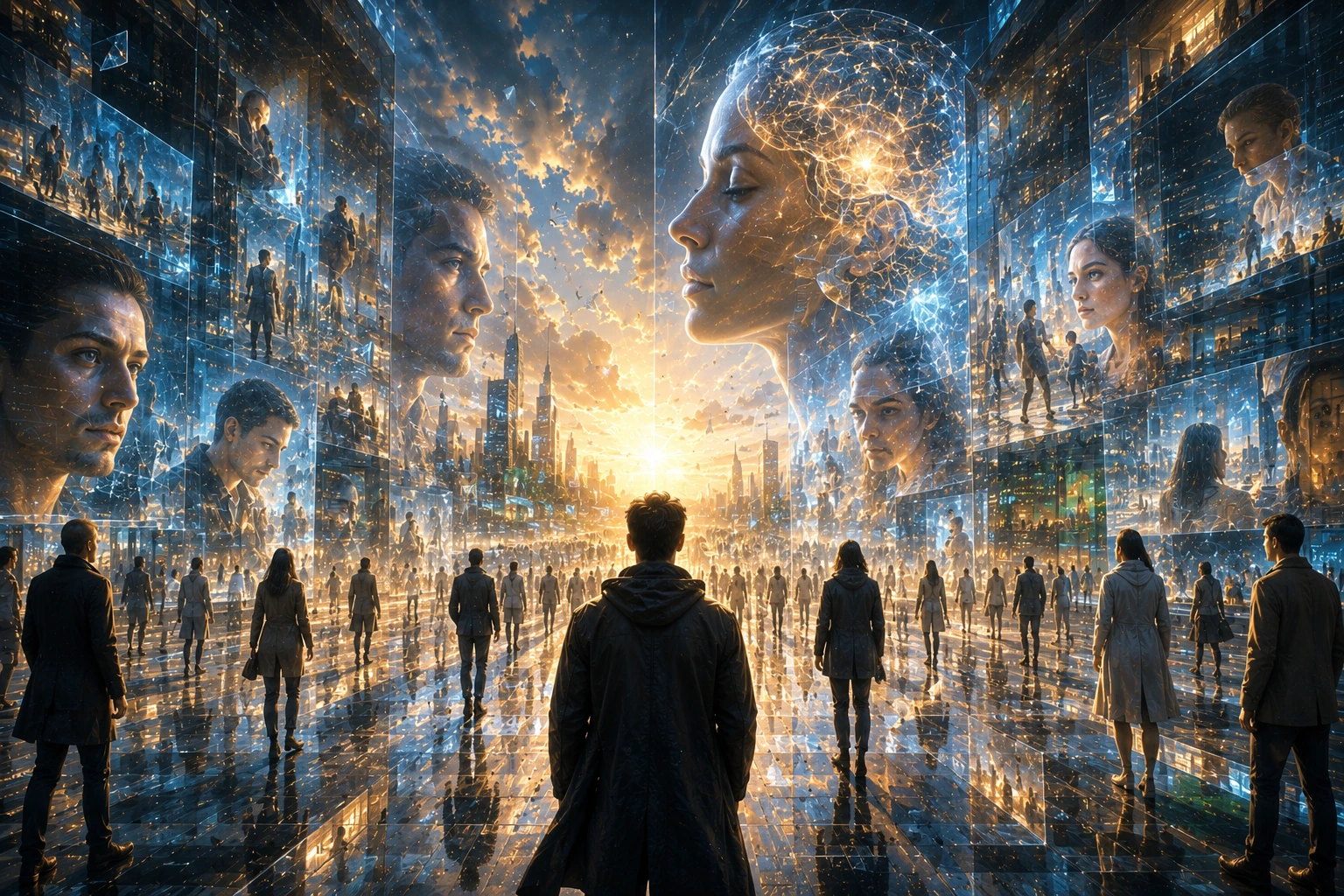
What if every secret, every hidden motive, every private thought, every fear, every intention and every reason behind every decision became visible?
Would humanity become more moral?
Or would it lose something more important than truth itself?
Absolute Truth Sounds Like Liberation
At first, absolute truth sounds like one of humanity’s greatest dreams.
A world without lies. A world without corruption. A world without manipulation. A world without false promises, hidden agendas, disinformation or carefully disguised motives.
Human civilization has always searched for truth. We build science to discover it. We build courts to protect it. We build journalism to uncover it. We build history to preserve it.
Truth matters because lies have consequences.
Deception destroys trust. Disinformation destroys societies. Hidden motives destroy relationships. False stories distort reality itself.
So it feels natural to believe that more truth would create a better world.
But there is a difference between truth and absolute truth.
Absolute Truth Is Not the Same as Honesty
Honesty is a choice.
Absolute truth removes the choice entirely.
In a world of absolute truth, there are no private thoughts, hidden doubts, unspoken fears, secret ambitions or unfinished inner conflicts. Everything becomes visible.
Every weakness. Every insecurity. Every temptation. Every contradiction. Every thought a person never intended to turn into action.
Absolute transparency may sound morally perfect.
But it may also destroy the inner space that allows people to grow.
Could Society Exist Without Lies?
A society without lies sounds ideal.
No fraud. No corruption. No manipulation. No hidden agendas. No false public images. No carefully edited versions of reality.
But human life is not made only of crimes and confessions.
It is also made of unfinished thoughts, uncertainty, hesitation, mistakes, fears and moments when people are still becoming who they will eventually be.
If every passing thought becomes public knowledge, society may gain information but lose mercy.
A world without lies could become a world without forgiveness.
Trust Requires Uncertainty
Trust exists because we do not know everything.
We cannot fully see another person’s intentions. We cannot predict every future decision. We cannot verify every hidden motive. We cannot know with certainty what someone will become.
So we choose to trust.
Trust is one of humanity’s most important social technologies precisely because uncertainty exists.
In a world of absolute truth, trust may stop being a virtue. It may simply become unnecessary.
But if trust disappears, do relationships remain the same?
Perhaps human relationships require not only truth, but also risk, patience, freedom and the possibility that another person remains partly unknown.
Privacy May Be Necessary for Freedom
Privacy is often treated as the opposite of honesty.
But privacy is not simply the ability to hide wrongdoing.
Privacy creates the space where people can think, doubt, experiment, change and become someone new without being permanently judged for every unfinished thought.
Without privacy, every immature thought becomes evidence. Every fear becomes a public record. Every doubt becomes part of a permanent identity.
Absolute truth may remove not only lies, but also the freedom to remain unfinished.
Absolute Transparency Could Become Dangerous
Most people assume transparency automatically creates justice.
Sometimes it does.
But absolute transparency can also destroy context.
A person may experience anger without becoming violent. Fear without becoming a coward. Temptation without becoming corrupt. Doubt without betraying love.
Thoughts are not actions. Intentions are not decisions. Hidden emotions are not always moral failures.
If a society loses the ability to distinguish between these things, truth itself may become destructive.
A world of total transparency could become a world without compassion.
Information Asymmetry Is Not Always Evil
Information asymmetry often sounds like a problem: one person knows more than another and can use that advantage for power.
Sometimes that is true.
But not every asymmetry is manipulation.
A doctor may not reveal everything at once. A diplomat may not expose every negotiation strategy. A parent may not explain the full complexity of danger to a child before the child is ready to understand it.
Truth sometimes requires timing, form and readiness.
Absolute truth without timing can become violence through facts.
Does Politics Survive Without Secrets?
Politics without lies sounds like a dream.
Politics without secrets may become a nightmare.
Diplomacy requires negotiation. Negotiation requires uncertainty. Compromise requires space where positions can evolve before becoming public symbols of weakness.
If every intention becomes instantly visible, conflicts may not disappear.
They may simply become faster, harder and more dangerous.
Absolute truth can expose evil.
It cannot guarantee wisdom.
Does Free Will Require the Unknown?
What happens when human beings become completely predictable?
What happens when systems know our decisions before we make them?
What happens when algorithms understand our motives better than we understand ourselves?
If every motive becomes visible, every reaction becomes predictable and every decision becomes explainable, does freedom survive?
Perhaps uncertainty is not a flaw in human nature.
Perhaps it is one of the conditions that makes freedom possible.
Cognitive Privacy and the Last Inner Territory
The future may not only challenge physical privacy. It may challenge cognitive privacy: the right to have an inner life that is not fully exposed, predicted, interpreted or owned by external systems.
If every emotional pattern, hidden fear and unspoken motive becomes visible, the private mind may become the last territory humanity loses.
A civilization may survive without many things.
But can it survive without interiority?
Why Absolute Truth Belongs to Philosophical Science Fiction
The best philosophical science fiction does not ask only what technology can do.
It asks what humanity can survive.
A world of absolute truth would transform law, love, politics, responsibility, privacy, trust, identity, freedom and human nature itself.
This is not simply a question about honesty.
It is a question about what remains human when every hidden layer disappears.
The Eternity Management Question
In the world of Eternity Management, the greatest danger is often not evil itself.
Sometimes the greatest danger is removing human limitations without understanding why those limitations existed.
Unlimited knowledge may destroy humility.
Perfect happiness may destroy longing.
Infinite freedom may destroy responsibility.
Unlimited power may destroy restraint.
Perfect memory may destroy the ability to begin again.
And absolute truth may destroy trust.
The real question is not whether humanity needs truth.
The real question is whether humanity could survive a world where nothing remains hidden.
Frequently Asked Questions About Absolute Truth
What is absolute truth?
Absolute truth is the hypothetical state in which all facts, motives, intentions, private thoughts and hidden reasons become completely visible and impossible to conceal.
Could society function without lies?
Possibly, but a world without any private inner space might become psychologically harsh, unstable and unforgiving. A society without lies may still need mercy, context and privacy.
Does trust require uncertainty?
Yes. Trust exists because we cannot know everything about another person. Without uncertainty, trust may lose its meaning as a human choice.
Is privacy necessary for freedom?
Privacy allows people to think, doubt, change and grow without immediate public judgment. Without privacy, freedom may become much weaker.
Could absolute transparency become dangerous?
Yes. Absolute transparency may destroy not only deception, but also compassion, context, trust and the right to remain unfinished as a human being.
Could humanity survive a world without secrets?
Perhaps, but such a civilization would be fundamentally different from the societies humans have built throughout history. Without secrets, humanity may lose privacy, trust, diplomacy, forgiveness and part of its inner life.
Read More
- Books About Reality
- Books About Consciousness
- Books About Choice
- Books About Free Will
- Books About Responsibility
- Books About Human Nature
- Books About the Future of Humanity
- Can Humanity Survive Unlimited Knowledge?
- Can Humanity Survive Perfect Happiness?
- Can Humanity Survive Infinite Freedom?
- Can Humanity Survive Unlimited Power?
- Can Humanity Survive Perfect Memory?