Books About Destiny: Philosophical Fantasy About Fate, Choice, and the Future
Books about destiny explore the invisible forces that seem to guide a life: fate, choice, prophecy, responsibility, time, and the future that waits beyond every decision.
For readers of philosophical fantasy, destiny is never only about what happens next. It is about whether the future is written, whether choice can change it, and what it means to shape eternity.
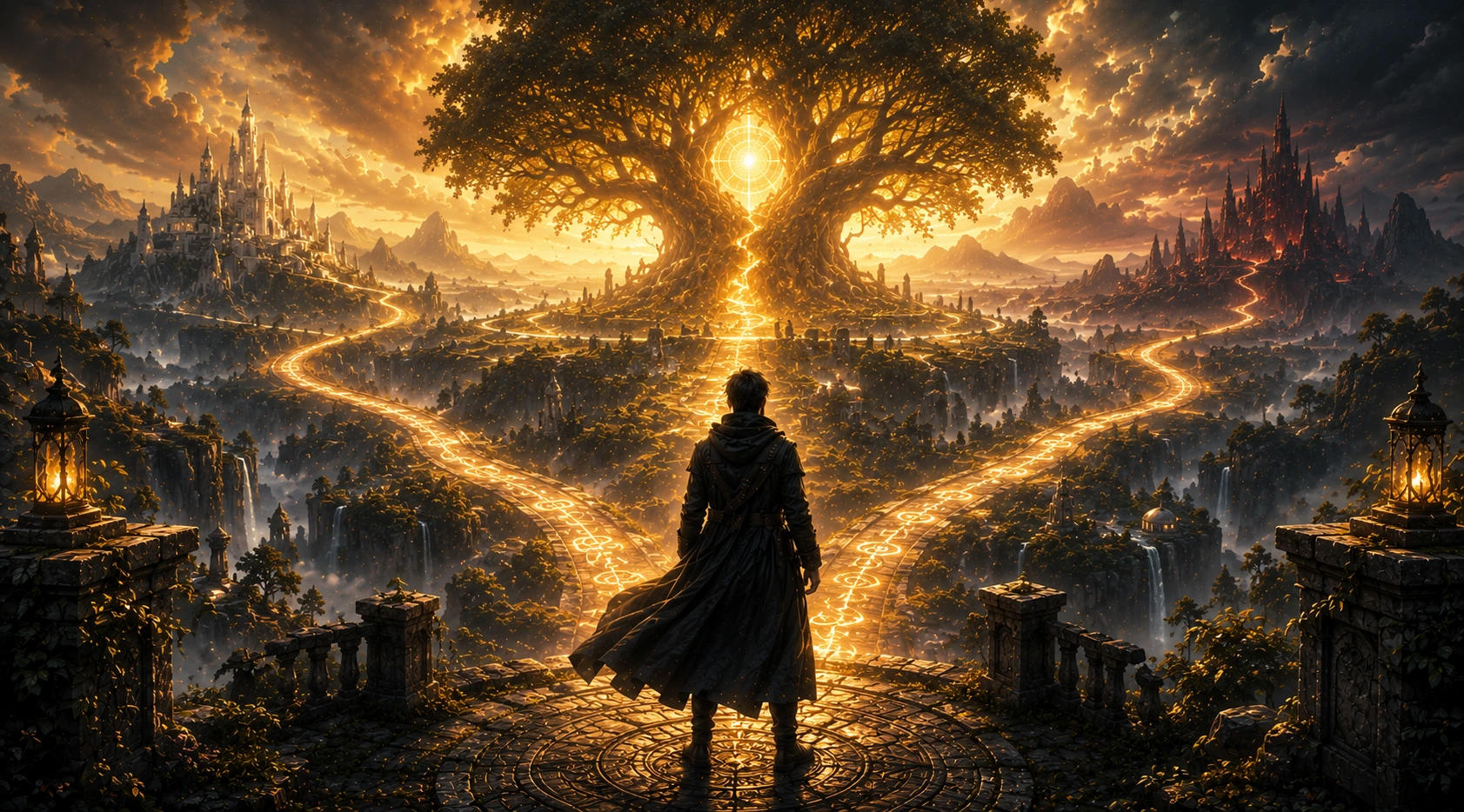
Books about destiny: philosophical fantasy about fate, choice, free will, time, responsibility, and the future.
What You Will Find on This Page
- why books about destiny are powerful for philosophical fantasy readers;
- how destiny connects to fate, choice, free will, and consequence;
- the difference between destiny and fate in fiction;
- why stories about destiny often become stories about responsibility;
- how the Eternity Saga explores destiny as something that can be guarded, destroyed, or shaped.
Why Books About Destiny Matter
Destiny is one of the oldest and strongest themes in storytelling because it touches a question every person eventually faces: is the future already waiting for us, or do our choices create it?
Books about destiny matter because they turn that question into story. A character may receive a prophecy, inherit a role, feel pulled toward a path, or discover that their life is connected to forces larger than themselves.
In philosophical fantasy, destiny becomes more than a plot device. It becomes a way to explore time, free will, memory, consciousness, reality, responsibility, and the cost of shaping the future.
What Makes a Book About Destiny?
A book about destiny is not simply a story where something important happens. It is a story where the future feels meaningful, charged, and connected to the choices of the characters.
The central question is often not “what will happen?” but “was this always meant to happen?”
These books often explore fate, prophecy, free will, difficult choices, consequences, moral responsibility, inherited burdens, and the tension between accepting a path and changing it.
Books About Destiny: Key Themes
| Theme | Question Explored |
|---|---|
| Destiny | Is the future already shaped, or still becoming? |
| Fate | Can a person escape what seems inevitable? |
| Choice | Can one decision change the path ahead? |
| Free Will | Are characters truly free, or guided by hidden forces? |
| Time | Does the future reach backward into the present? |
| Responsibility | Who must answer for the future they help create? |
Books About Destiny and Fate
Destiny and fate are often used together, but they are not always the same. Fate can feel fixed, unavoidable, and imposed from outside. Destiny can feel like a path that calls to a character, but still requires action.
Books about destiny and fate explore this tension. If something is meant to happen, does that remove responsibility? Or does it make responsibility even greater?
The strongest stories show that fate may create pressure, but destiny is revealed through what a character chooses when that pressure arrives.
Books About Destiny and Choice
Destiny becomes most interesting when it collides with choice. A prophecy may point toward one future, but the character still has to decide whether to obey, resist, reinterpret, or transform it.
Books about destiny and choice ask whether the future is discovered or created. They show that even when a path seems prepared, the way it is walked can change everything.
This makes destiny one of the most natural companion themes to books about choice, free will, and consequence.
Books About Free Will and Destiny
Books about free will and destiny ask whether a person can be truly free inside a world filled with prophecy, duty, inherited roles, cosmic design, or hidden systems.
Freedom becomes meaningful when the character understands the cost of every path. A choice without pressure is easy. A choice inside destiny is harder, because it may change more than one life.
In philosophical fantasy, free will is often tested at the exact moment when destiny appears strongest.
Books About Destiny and the Future
Destiny is always connected to the future. It asks what waits ahead and whether that future can be changed before it arrives.
Books about destiny often use visions, dreams, prophecies, signs, alternate futures, or impossible knowledge to make the future feel present before it happens.
That creates a powerful conflict: if a character knows what may happen, are they responsible for preventing it, fulfilling it, or reshaping it?
Books About Destiny and Time
Destiny cannot be separated from time. It is the idea that the future has weight before it becomes real.
Books about destiny and time explore whether events move in a straight line, whether the future can reach backward into the present, and whether decisions can alter what seems inevitable.
In the Eternity Saga, time behaves like a living system. That makes destiny more than a prediction. It becomes a field of possible futures shaped by memory, consciousness, and choice.
Books About Destiny and Reality
Some destiny stories do not only change a person’s life. They change what becomes real.
Books about destiny and reality explore how one path can become actual while others remain possible, hidden, lost, or waiting. A character may discover that reality itself depends on which future is chosen.
This is where philosophical fantasy becomes especially powerful: destiny is not just personal. It can become structural, shaping worlds, systems, civilizations, and eternity itself.
Books About Destiny and Consciousness
Destiny changes when a character becomes aware of it. A hidden future is one thing. A known or suspected future creates responsibility.
Books about destiny and consciousness ask how awareness changes choice. If a character sees the possible consequences of a path, can they still claim innocence?
Consciousness turns destiny from an external force into an internal burden. The character must decide what to do with what they know.
Books About Destiny and Memory
Memory gives destiny depth. A future may be ahead, but every path is shaped by what has already been remembered, lost, inherited, or misunderstood.
Books about destiny and memory often show that the future is not created from nothing. It grows from old promises, forgotten mistakes, inherited trauma, ancient knowledge, and the long memory of individuals or civilizations.
In philosophical fantasy, memory can become the hidden root of destiny.
Books About Prophecy and Destiny
Prophecy is one of the classic ways fiction explores destiny. A prophecy can guide, warn, manipulate, or trap a character inside someone else’s vision of the future.
Books about prophecy and destiny often ask whether knowing the future helps a person change it, or whether that knowledge becomes the very force that causes it.
The best prophecy stories do not only ask if the prophecy is true. They ask who benefits from believing it, who suffers because of it, and whether the future can still be chosen.
Why Philosophical Fantasy Explores Destiny So Deeply
Philosophical fantasy is one of the best genres for destiny because it can give visible form to invisible forces.
Destiny can appear as a road, a tree, a prophecy, a symbol, a ruined city, a living system of time, or a choice that echoes beyond one lifetime.
Fantasy gives destiny scale. Philosophy gives it meaning. Together, they create stories where the future is not only a destination, but a question.
The Eternity Saga: Philosophical Fantasy About Destiny, Time, and Choice
Readers interested in books about destiny may enjoy the Eternity Saga by Denys Kostin.
The series explores a universe where time behaves like a living system and where destiny is shaped by choice, memory, consciousness, reality, immortality, and responsibility.
Those Who Guard Eternity
The first book introduces a world where eternity must be protected and destiny becomes responsibility.
Those Who Destroy Eternity
The second book deepens the conflict as dangerous choices threaten the future of eternity.
Those Who Shape Eternity
The third book asks who has the right to shape destiny, reality, time, and the future.
Recommended Reading Order
- Those Who Guard Eternity — begin with the first conflict around destiny, time, and responsibility.
- Those Who Destroy Eternity — continue into the consequences of choices that threaten eternity.
- Those Who Shape Eternity — follow the final question of who has the right to shape the future.
Who Should Read Books About Destiny?
- readers of philosophical fantasy books;
- fans of books about fate and free will;
- readers interested in destiny, prophecy, and the future;
- people drawn to books about time, choice, memory, and reality;
- readers looking for fantasy with deeper meaning.
Books about destiny are ideal for readers who want stories where the future matters and every path carries weight.
The Eternity Saga connects destiny to time, choice, consciousness, memory, reality, immortality, and responsibility before eternity.
Explore Related Themes
Books About Choice
Destiny becomes meaningful when a character must decide whether to accept, resist, or reshape it.
Books About Time
Destiny is the future reaching into the present before it becomes real.
Books About Reality
Destiny can determine which possible future becomes reality.
Readers Searching for Books About Destiny Also Explore
- books about fate;
- books about free will;
- books about destiny and choice;
- books about prophecy;
- books about the future;
- books about time, memory, consciousness, reality, and immortality;
- philosophical fantasy books with deeper meaning.
Read Philosophical Fantasy About Destiny Online or on Amazon
If you are looking for books about destiny, fate, choice, free will, prophecy, and the future, the Eternity Saga offers a mythological and philosophical approach to those themes.
Begin with Those Who Guard Eternity and enter a universe where destiny is not passive, time is alive, and every choice can shape eternity.
Frequently Asked Questions
What are books about destiny usually about?
Books about destiny often explore fate, free will, prophecy, choice, responsibility, the future, and whether a character can change what seems inevitable.
What is the difference between destiny and fate?
Fate often feels fixed or unavoidable, while destiny can feel like a meaningful path that still requires choice, action, and responsibility.
Are books about destiny also books about free will?
Often, yes. Books about destiny frequently explore whether characters are truly free, whether the future is already shaped, and how responsibility changes when they understand the possible outcome.
What are the best philosophical fantasy books about destiny?
Readers looking for philosophical fantasy books about destiny may begin with the Eternity Saga, which explores destiny, time, choice, memory, reality, consciousness, immortality, and responsibility.
Where can I read the Eternity Saga?
The Eternity Saga can be read online through the official Cokos.org library, starting with Those Who Guard Eternity. Readers who prefer Kindle can also use the Amazon link on this page.
Begin a Fantasy Saga About Destiny, Time, and Eternity
Enter a philosophical fantasy universe where destiny is not fixed, time is alive, and the future can be guarded, destroyed, or shaped.
Explore the full hub of philosophical fantasy books if you want stories about meaning, consciousness, choice, time, destiny, reality, and eternity.